Wednesday, March 18, 2015

First Impression of Me the People

Although I usually blog about fiction, I recently found Me the People: One Man's Selfless Quest to Rewrite the Constitution of the United States of America buried in the crevice of a bookshelf. This political parody was given to me for Christmas. Given the choice between an iPhone and a book... well, you can understand why Me the People ended up in The Pile. (Contents include: brotherless socks, late HW assignments, and history-books-I-got-for-Christmas)

My very first impression of it was slightly biased, to say the least. 

"The Constitution has served us well for centuries. Thanks to Kevin Bleyer those days are over. -Stephen Colbert" 

Me: OMIGAWD its Stephen Colbert! I love his show! I guess I have to give this book a try. But only in the name of Stephen. 

Aside from that, I didn't really know what to expect from this book. First of all, my knowledge of the Constitution is pretty limited. Case in point: Remember "Life, Liberty, and the Pursuit of Happiness"? I thought that was part of the Constitution. Nevermind that it's actually the second sentence of The Declaration of Independence. 

Oh, stop laughing. 

In all seriousness, I realized how pathetic I was. Here stands Connie Mi, a proud US citizen... who doesn't even know the Seventh Amendment. (Turns out it has to do with civil trials.) Besides, Stephen Colbert.

And thus begins my reading journey.

The first chapter was a pleasant surprise. Heck, the first sentence was unexpectedly humorous. Kevin Bleyer's egotistical, All-American voice captivated me from the very beginning. He makes fun of typos in the Constitution. He makes fun of the George Washington's wooden teeth. And just when you think ol' Kevin's running out of jokes- he proceeds to make fun of Congress.

"Article II: Congress, the Opposite of Progress (Yeah I said it.)"
Bleyer makes a valid point. Although the US Constitution has been effective for 200+ years, there's always room for improvement. Me the People is a carefully mixed cocktail with a dash of satire, a bit of analysis, and a whole lotta funny. 


I started Me the People just as I finished Fahrenheit 451. I tried to imagine all the horrible things Beatty would do to authors today... If it weren't for the Constitution, we would all be living in a society like Montag's. (See: First Amendment “Congress shall make no law...abridging freedom of speech.”) 

We change it (27 times to be exact), misquote it, and passive-aggressively write books about it- in the end however, the Constitution has protected our most basic right: freedom of expression. The purpose of Kevin Bleyer's book was not to criticize our government. Instead, it was simply proof of the power of freedom. 

It seems that I have found a treasure in The Pile. 


And as for all my History geeks out there... here's an original transcript of the US Constitution, clear and bold in blacke and whytehttp://www.archives.gov/exhibits/charters/constitution_transcript.html


Sunday, March 15, 2015

A Letter to the Main Character

New Message

To: Bernadette Fox, foxyarchitectsanonymous@gmail.com

Subject: Hello. I'm a fan.

If you are reading this, then I am extremely honored. I know that you hate your fame, so I'm glad that my fan-mail is an exception.
After reading Maria Semple's story, I couldn't stop thinking about the book. I loved you, and at the same time, I hated you. (Only for 9 pages, though.) Nonetheless, you've gained my respect.

As a misunderstood genius myself, I can totally relate to your fear of people. Actually, who are we kidding here? Haha, I'm the queen of stupidity. Even so, I can still relate to your social anxiety. After a mental breakdown, you disappeared. To Antarctica.
Your daughter, Bee, was devastated... to say the least. You were allergic to your husband, your peers, and people in general. Also, I have to mention that you hired a virtual assistant from Delhi to buy groceries for you.
Edit: I can relate to your social anxiety... to a certain degree.

Remember that one time when you left your entire family and escaped to Antarctica without even a heads-up? Oh, that's right. Your agoraphobia was all caused by a tiny spat TWENTY YEARS prior.
It's understandable, I guess. You are a genius, no doubt. You won the McArthur Genius Grant, for pete's sake. Nothing in the world could stop your eccentric creativity. People feared you, out of admiration and out of jealousy. Fast forward 20 years later, and you've become afraid of people. No open windows, no doctor's appointments, no donut runs...
My point is this: even if parent volunteering brunches aren't your thang, community involvement is still important to life. Don't hold a grudge against all 7+ billion of us. And don't let one idiotic bloke ruin 20 years of your life. One rotten apple doesn't spoil the whole barrel. 

Was it selfish for you to leave everything behind? I don't think so. In the end, your daughter was right:


People like you must create. If you don't create... you will become a menace to society.

Maybe Bee just wanted you to have an outlet for your anger, instead of constantly running away. After all, failure is not just a Black Hole that takes but never gives. 

I guess we all have a lot to say in life. Perhaps you can contribute to the conversation just by creating what you love, forgiving those you love, and loving who you love.

If there was an award for Best Mom, it would have to go to... my Mom! Unfortunately, you came in second place.

All joking aside, your love for Bee is heartwarming.

“When "Here Comes the Sun" started, what happened? No, the sun didn't come out, but Mom opened up like the sun breaking through the clouds. 
'Oh Bee,' she said. 'This song reminds me of you.' She had tears in her eyes.”

I think this email was just my way of saying thank-you-so-much without the tacky card attached. Thank you for your incredible humor, your inspiring journey, and your healing power of love. May we all find a bit of Bernadette Fox in ourselves.
Cheers,
Connie Mi

Friday, March 13, 2015

Theme Presentation Handout


Theme Statement: People should take action, rather than watch a society falter and crumble.

At the beginning, Montag is very ignorant about the true consequences of burning books.
Montag started to examine his role as a firefighter when he met Clarisse. He also starting questioning his happiness and life.
One day, Millie overdoses on sleeping pills. However, she shows no concern about anything. Later at work, Montag witnesses a woman being burned for loving books.
Montag takes action and meets with Faber. He asks him for help in understanding books.
Beatty orders Montag's house to be burned. Montag takes action by killing Beatty and destroying the mechanical hound. He escapes the city by running to the forest.
He finds a group of intellectuals, who accept him into their group. The group continue to walk forward and into the future, despite the destruction of their old society.

https://prezi.com/xd-6bzvk61re/copy-of-copy-of-mind-mapping-template/#

Wednesday, January 21, 2015

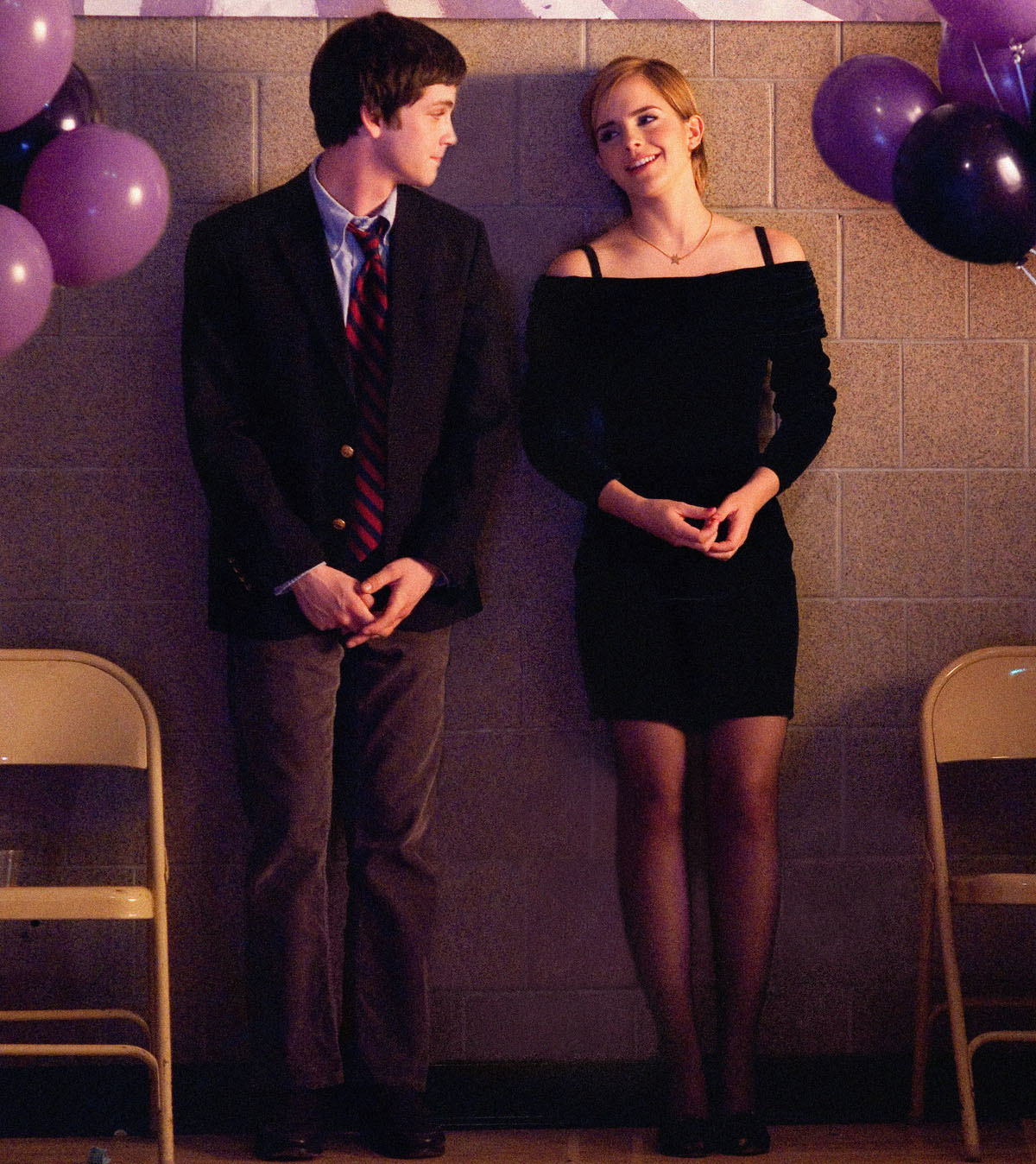
Character Analysis- The Perks of Being a Wallflower

wallflower

[wawl-flou-er] 

"You see things. You keep quiet about them. And you understand.” 

        Charlie is a wallflower. 

        He's a 15 year old an aspiring writer, introspective, and caught between trying to live, well, life and trying to fly away from it. For all the right reasons, Charlie shies away from the social spotlight after the suicide of his friend and the death of his aunt... until he meets the effervescent Sam and the quirky Patrick.


        Not only is Charlie a "nobody", he is also a philosopher in training. He's like... the new teenage Plato. All those hours of skirting around the dance floor must have paid off, because Charlie has a lot to say. The honesty of his voice was like ice cold lemonade in the 90 degree summer weather- refreshing. He makes careful quips about insincere friendships:


“I am very interested and fascinated how everyone loves each other, but no one really likes each other.” 

And daydreaming:

Sometimes people use thought to not participate in life.” 

Washing dishes:
“Try to be a filter, not a sponge.” 

            Ok, so enough of me laughing at my own lame jokes in front of the computer. 
            Charlie truly is a gem. He is genuinely concerned about the feelings of other people, even strangers. Despite all the twists and turns in his own life, as he walks down the hallway, he can't help but wonder... "It's like looking at all the students and wondering who's had their heart broken that day, and how they are able to cope with having three quizzes and a book report due on top of that. Or wondering who did the heart breaking. And wondering why.”
And the unconstrained sympathy doesn't end there. Charlie refuses to break up with Mary-Elizabeth, his girlfriend, even though he is in love with Same, and never really liked her in the first place. Tactful, no. But caring? At least he tries.


          And if you can't already tell by now, our little wallflower spends a lot of time analyzing, well, everything. Which, as you can guess, becomes a burden. Things really start going downhill when he starts to realize that Aunt Helen, the most beloved person in his life, died because of him. To the reader, its a twisted mix of emotions- we later learn that Aunt Helen molested Charlie all throughout his childhood. Because of this major flaw, Charlie is unable to stop his own spinning mind, and the flashbacks.
         And I can't lie. Flipping through the pages was a lot like standing in front of a mirror. Sure, I may not be as socially awkward as Charlie (well, I certainly hope not), aaaaand I don't do drugs or smoke or ride in a truck without a seatbelt oh goodness the thought of such an act - The point is, even though we live in such different worlds, the girl who still sits lonely on the bus and wonders if anyone understands... saw herself in the boy who danced alone at homecoming. 

        And that's what I truly find so beautiful about his character. Charlie's inspiring and poignant letters are all addressed "Dear Friend". There was something about the way the author wrote him that you’ll start to see the world through his eyes. My situation is far from Charlie's, but I do not feel pity... rather... empathy. It's as if he was writing to me, to you...to everyone. He has a story to tell, and the exhilarating scenes are just as riveting as the solemn ones. And as Charlie navigated his way through the unmapped world of first dates and family dramas, I saw things, I kept quiet. And I began to understand... 

       If I had to capture in the essence of Charlie's life with a non-human noun, it would be... tunnel.
Yes, literally. In chapter 13, Charlie drives through a tunnel, all while overanalyzing the meaning of said tunnel. Later, he passes through the same tunnel with Sam and Patrick in the epilogue. (He really likes public infrastructure). This time, the ride was a little more magical.


"It was me standing up in that tunnel with the wind over my face... Not even thinking about it. Because I was standing in the tunnel. And I was really there. And that was enough to make me feel infinite."

         It's a metaphor for life. Or a car commercial. Either way, Charlie has showed me that sometimes the Ford F150 of life will break down. Sometimes it will get a flat tire and need a repair. When he cruised through the tunnel, it symbolized the transition of personal growth. For the first time, Charlie stood in the middle of the dance floor and just lived in the moment. He proved to me that although outskirts offer great sights and sounds, sometimes you have to reach your pinky toe out, just for a taste. Again and again, Perks has empowered me to spread my wings, to take flight, and most importantly... to soar.

And here, for your enjoyment, is "The Tunnel Song".

Wednesday, November 5, 2014

Text to Society- Princess: A True Story of Life Behind the Veil in Saudi Arabia

Warning: Not recommended for those who are have no feelings. In other words, everyone with a heart (literally, everyone) should take the time to read this insightful memoir.

Sultana, a young Saudi princess is born into prestige and opulent wealth. She has three mansions on four different continents, private jets, and numerous servants (read: house slaves) who attend to her every need. Are you jealous yet? Don't be. In reality, she hides under a veil. Sultanta cannot marry a man of her choice, must bear sons, and is subject to opression from the males of her soicety. Yeah, still jealous?


It's no secret that Saudi Arabia has an international reputation of violation of womens' rights. It's a questionable accusation, but the facts cannot be disregarded. Women must travel at all times with a male guardian. They cannot drive or vote. The black veil they must wear covers their eyes. Lots of public spaces are segregated with "No Women" signs. Hey, to one's own opinion, but... at the very least, one could call it a lack of freedom.

The following is the link to a video of a Saudi Princess retelling her tale:
https://themuslimissue.wordpress.com/2012/11/09/video-saudi-princess-describes-the-treatment-of-women-in-saudi-arabia-as-slavery/

Her experiences are hauntingly similar to Sultana's, and they may or may not be entirely the same person. Coincidence? I think not. The truth of the story is, there are countless Sultana's living amidst the brutality of their fathers, husbands, brothers, and sons. There are countless stories of women old and young, rich and poor, who all yearn for freedom. There are countless spirits waiting to be freed.

It's important to note that this book was written waaaayy baacck wheeen in 1992 when Saudi Arabia was first opening its arms towards modernization. Slow changes have been made, and... now women have the right to vote - *disclaimer* starting in 2015. Yay, what a let down. But in all seriousness many violations still occur. The driving ban has not been lifted, and recently in 2008,  Wajeha al-Huwaider gained international fame after a film of her driving was posted to Youtube.

In light of the events of 9/11, and more recently, the Women 2 Drive campaign, many people around the globe (cough, mostly us 'Muricans) still hold a negative perspective of the Islamic religion. The Qu'ran does not actually explicitly state that women should be treated any less than their male counterparts- their relationship to God (Allah) is the same. Men are considered a degree above women, but keep in mid that during the dinosaur age (7th century, for you history geeks), most women of other religions were seen as nothing more than possessed, soulless, sinful creatures. So by those standards, the Muslims were pretty avant-garde. The "oppressive" regime is probably caused more by the factors of the Saudi culture, rather than the factors of Islam. In plain English, some of us are ignorant fools! Look no further than Twitter (#islamopobia) for justification.

Take a closer look around you. We see all forms of oppression in all cultures and societies. Saudi Arabia's example of violation of women's rights is an especially extreme example. The fight for freedom is so commonplace that we often don't stop to acknowledge it and participate ourselves. From the book, you can begin to dull the lines drawn between the western movement and Saudi Arabian movement on women's rights. Though we stand up in different ways, and stand for different beliefs, we all stand behind one mantra: Fight for freedom... it is priceless.

Monday, November 3, 2014

It is a funny story...

It's Kind of a Funny Story. Really. I'm serious.
I have this theory that the title of a book determines its fate.

Gasp! Connie is judging a book by its cover!

Fortunately in this case, It's Kind of a Funny Story has lived up to its name- in the most subtle, contradictory, hear-wrenching way. 

Craig is a 15 year-old high school guy. He's interested in three things: 1) Getting good grades so he can go to a good college and therefore get a good job. 2) Getting more good grades to impress girls, and, 3) Getting more and more good grades all while acting cool and going to parties. He's an ambitious student (no duh) who strives to get into the prestigious Executive Pre-Professional High School in Manhattan. Wow, that was a mouthful. The pressure to succeed builds up and his internal anxiety finally erupts. Craig finds himself clinically depressed. In his own words, 
“I can't eat and I can't sleep. I'm not doing well in terms of being a functional human, you know?” 

When asked by his Shrink about things in life he does enjoy, he replies simply, "...Peeing.Yeah, it's simple." "You like simple?" "Doesn't everyone?"

Craig's thoughts soon turn suicidal. One night, he heads to the Brooklyn Bridge, to do the unthinkable. Luckily, he calls the Suicide Hotline and lands himself in a psychiatric hospital where he meets a girl who scarred her own face with scissors, a transgender addict, and other people who, he realizes,  are equally as messed up as he is.

Who would've guessed that such a serious topic could be translated into... well, a funny story? In a way, all 444 pages congregate into a huge paradoxical metaphor for life. 
Yup. Another life lesson: The journey of self discovery is difficult but worthwhile. 
Hehe... I guess that was a good time to sneak in the theme.

Several times throughout the novel, Craig's Cycling thoughts race around in his head so fast, that he feels exhausted from just ...being
“I didn't want to wake up. I was having a much better time asleep. And that's really sad. It was almost like a reverse nightmare, like when you wake up from a nightmare you're so relieved. I woke up into a nightmare.” 

Despite the immense amount of pain Craig dealt with, also he manages to offer some surprising pieces of advice. 
“Things to do today:
1) Breathe in.
2) Breathe out.” 

It's evident that his voice is genuine. After doing some research (thanks to Google), I found out that Ned Vizzini, the author, based Craig's story off his own struggles with depression. What's interesting is, Craig comes from a privileged family who sincerely supports him. His parents and sister are loving and kind, and... normal. In a good way. Most times, we tend to relate suicide with kids from disadvantaged backgrounds- it's true in a lot of cases- but not his. 

I think this seemingly minute detail is what truly makes the theme of this book outstanding. Vizzini's story extends beyond our preconceived notions of mental illness and allows us to recognize the individual battles being fought by all 7,271,978 homo sapiens inhabiting this planet. (Again, let's applaud Google.) People who appear to have plastically perfect lives may be enveloped in a disguise- whether it be depression, anxiety, stress, poverty, discrimination- we all have something that sends our brains into Cycling mode. Perhaps we should all listen to Craig, a boy so mature beyond his years, yet still riding through the ups and downs of an endless journey. Perhaps we should pause in our steps and allow ourselves to just breathe in, breathe out... 

It's Kind of Funny, how we as living beings have to learn to live all while living. By using charming wit and the right amount of sarcasm, the author has created a delicate balance that strikes the right tone- the funny yet realistic voice of the main character humanizes his experience while not making too much light of it.  

I'm sure you've all seen online blogs with pictures and captions targeting self harm. We can argue 24/7 about whether or not these posts and photos actually "romanticize" depression. We can debate on and on about the correctness of suicide and honoring its victims. We can simultaneously find fault or merit in books like It's Kind of a Funny Story. 

In the end, however, it boils down to one thing: depression is not a black hole that sucks you in and keeps you prisoner. It's a place where your brain crawls to when it starts to wander off. Reading It's Kind of a Funny Story made me laugh and cry and develop dark circles under my eyes... and most importantly, it empowered me. While I (unapologetically) sympathized and empathized with the characters, I realized that, indeed, "Not all those that wander are lost". As long as you search, they'll always be find a way to find home. 

So, keep looking.
Keep living.

Thursday, October 9, 2014

Best of Extremely Loud and Incredibly Close

I'm wearing my heavy boots today...
One chapter down in Extremely Loud and Incredibly Close, and my tear ducts are already exhausted.
I blame it on Mr. Jonathan Foer's novel. Oskar Schell is a 9 year boy (and among other things, an entomology enthusiast, Francophile, detective-in-training, jeweler, tambourine percussionist, vegan, and collector of keys), who takes the reader on an unimaginable journey after the death of his father. Thomas Schell died on 9/11, and as the Twin Towers collapsed, so did Oskar's life. After finding a key that might reveal his dad's last message, Oskar begins a search for healing. 


Embedded in this linguistic metaphor are two extremely incredible characters (See what I did there?) If there was to be a superlative for the "Most unrealistically captivating person" person, Oskar would reign as the champion. His endearing personality has been, arguably, the best part of the book so far. Yup, all 16 pages. (Hey, I'm no Usain Bolt when it comes to reading.) Here's one example of his charming wit:


"What about little microphones? What if everyone swallowed them and they played the sounds of our hearts through little speakers, which could be in the pouches of our overalls?...You could hear everyone's heartbeat...The finish line at the end of the New York City Marathon would sound like war."


After reading just one narrated paragraph, I felt like I'd stumbled into the Encyclopedia and got trampled over by giraffes on the way out. No, more like 2 ton wildebeests. His character's voice is so...overwhelming that it works in the book's favor. Oskar divulges his raisins d'ĂȘtre, blathers about limos, and prattles on about crystal chandeliers, all in one sentence. However, his river of thoughts eventually trickle down into a dam built out of grief and sorrow. When Oskar reminisces the Worst Day, he wears "heavy boots", gets anxious about skyscrapers, and makes philosophical statements like these: 


“I regret that it takes a life to learn how to live.” 

(Pretty deep for a 9 year old, huh? Someone call Socrates.) 


“Sometimes I can hear my bones straining under the weight of all the lives I'm not living.” 

Clearly, this kid is a genius. His witty comments and thoughtful  sentiments somehow reduce me to a puddle of laughs and tears. Even though I've only read approximately 8396 words (eh, rough estimate), I can already hear Oskar's voice
loud and clear, even I'm not even close to finishing. (I'm way to good at this.) His blunt, yet sweet memories of his loving father was enough to make me think of someone I know- my own Dad. 


In a way, I feel that one of the most rewarding experiences form reading realistic fiction is being able to see the world from the eyes of another human being. Okay, maybe 9 year old prodigies aren't so much of the "norm", and yeah, its pretty hard to relate to conjugating French verbs, but... its the same shared feeling that connects us. *Cue the dramatic music.* The loss of a family member, the feeling of emptiness, the search for a new beginning- these are real. Everyone has days when they wear their heavy boots


So, as I continue to shuffle through the following chapters (at a turtle's pace, nonetheless), I will definitely look forward to reading both Oskar and his dad's stories. And hopefully, I will finish the book with a wiser cranium, a stronger heart, and lighter boots.